




There is a dangerous habit in the dealership business. Whenever performance slips, we go looking for a tactic. When sales are down, we change the advertising. When CSI drops, we hold a customer service meeting. When turnover increases, we ramp up recruiting.
While those actions may temporarily improve a number, they often ignore the real problem. The dealership may not have a sales problem, a marketing problem or even a people problem. It may have a leadership problem, and that distinction matters.
No advertising campaign can overcome weak leadership forever. No CRM can compensate for a culture nobody believes in. No compensation plan can permanently motivate employees who do not trust their managers. And no customer-experience initiative can succeed when the employee experience is fundamentally broken.
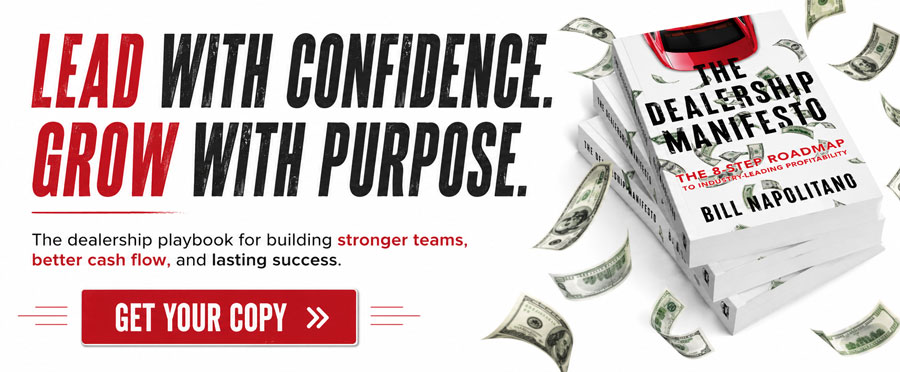
That is one of the central messages behind the “Leadership” and “Relationships” chapters of “The Dealership Manifesto.”
Stop Confusing Management with Leadership
The dealership industry has historically promoted people because they were good at the job they held before being promoted. A great salesperson becomes a sales manager. A productive technician becomes a shop foreman.
Sometimes it works. Other times, it creates an expensive problem, because technical competence and leadership competence are not the same thing.
Leadership requires an entirely different skill set: creating clarity, coaching people, confronting issues, holding people accountable, developing talent and getting an organization to execute consistently through others.
Yet too many dealerships still operate under an unspoken philosophy: “They know the business. They’ll figure out the leadership part.” That is not a leadership-development strategy. It is hope, and hope is not an operating system.
In “The Dealership Manifesto,” assessing leadership potential comes down to three questions: Do they have the desire to excel? Do they have the willingness to do what it takes? And do they have the discipline to execute?
Those questions go far beyond tenure or past production. They force us to ask whether the person sitting in the leadership seat is actually capable of leading the organization forward.
Your Culture Is Telling the Truth About Your Leadership
Most dealerships have values and mission statements. Some have posters hanging in the conference room talking about integrity, excellence and teamwork. None of that means you have a culture.
Culture is what actually happens when the dealer principal is not standing in the room. It’s what happens when a customer complains, a salesperson misses a goal, or a service advisor makes a mistake. Culture is what happens when someone raises a problem nobody wants to hear about.
As “The Dealership Manifesto” puts it, culture is a habit. It shows up in daily behavior, in how people treat each other and in what happens when nobody is watching.
If your stated values say “people first,” but your managers humiliate employees in meetings, your culture is not people-first. If you say “customer focused” but your employees feel invisible, your culture is not customer focused. If you preach accountability but tolerate repeated underperformance from a high producer because that person “makes us money,” your employees have already figured out what your real values are.
They pay attention to behavior, not slogans.
Your Customer Experience Starts in the Break Room
Dealership leaders spend enormous amounts of money trying to improve customer experience. But there is a problem: Customer experience is often treated as something the frontline employee should deliver, rather than something leadership must first create internally.
That is backward.
Employees do not magically become warm, engaged, patient and service-oriented when a customer walks through the door. They bring their workplace experience with them. If employees feel supported, respected and valued, that tends to show up in customer conversations. If they feel ignored, beaten down or expendable, that shows up too.
You cannot create one culture for your employees and expect them to produce a completely different culture for your customers. The employee experience is not an HR issue; it is a customer-retention issue and, ultimately, a profitability issue.
The Relationship Is the Return
Dealership leaders naturally want measurable ROI. “If we invest in coaching employees, what do we get back?” “If we spend time building customer relationships, when does it pay off?”
The answer is both simpler and more powerful than many leaders expect: The relationship itself is the return. When leaders invest in people because they genuinely believe in them — not because they expect an immediate transaction in return — they begin creating loyalty, discretionary effort and trust.
Over time, those relationships become economic assets. Employees stay. They recruit other good people. Customers have their vehicle serviced by you, then return to buy the next one from you. They send friends. They bring family members. They become advocates.
That is lifetime value, and unlike a temporary price promotion, strong relationships are extremely difficult for a competitor to copy.
Here Is the Question Dealers Should Be Asking
Instead of, “How do we sell 20 more cars this month?” try asking, “What kind of organization are we building to sell more cars, retain more customers and attract better employees over the next five years?”
That is a leadership question, and it requires leaders willing to look beyond this month’s statement.
At your next management meeting, ask five uncomfortable questions:
- Do we have the right leaders in the right seats?
- Are our managers coaching or merely correcting?
- Would we want our customers treated exactly the way our employees are treated?
- Are we creating real relationships or simply processing transactions?
- What behavior are we tolerating today that is quietly damaging our culture?
Do not turn the conversation into another discussion about intentions. Pick one change. Assign ownership. Set a measurable expectation. Follow up.
Because your dealership’s greatest competitive advantage may not be your franchise, your facility, your inventory or your advertising budget. It may be something much harder to duplicate: better leaders, stronger relationships, a culture people do not want to leave — and customers want to come back to.

Get your copy of “The Dealership Manifesto” today.